


New International Publication

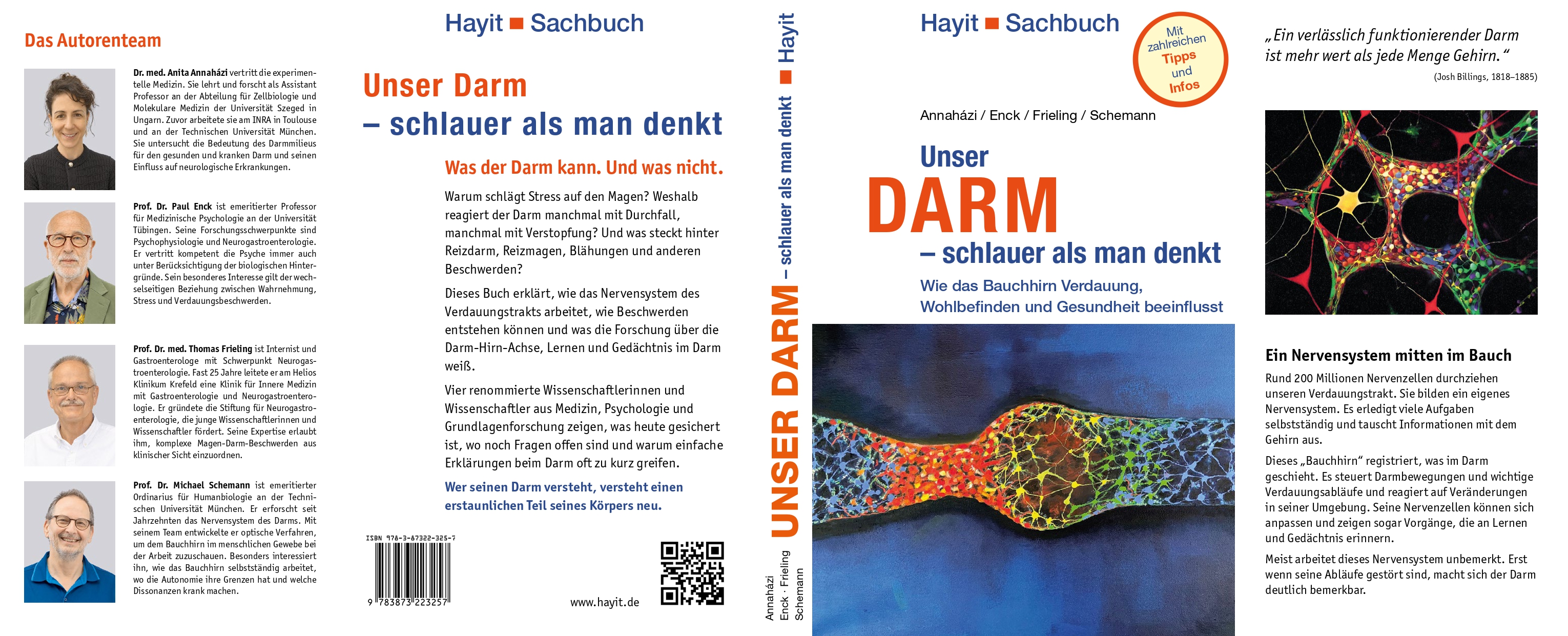
A new paper entitled "Faecal proteases and immune signatures drive subtype-specific enteric neuronal activation in IBS" has been published in the prestigious journal Gut. The study was led by Dr. Anita Annaházi from the Department, in collaboration with physicians from the Centre of Gastroenterology and Nephrology, Department of Internal Medicine, University of Szeged, researchers from the Genome Integrity and DNA Repair Team, University of Szeged, as well as German and French collaborators.
Irritable bowel syndrome (IBS) affects millions of people worldwide, yet there is still no simple diagnostic test to reliably identify the disease, and currently available treatments remain only partially effective. Our study demonstrated that components present in the stool of patients with both diarrhoea-predominant (IBS-D) and constipation-predominant (IBS-C) IBS activate neurons of the gut wall (enteric neurons) more strongly than those from healthy individuals. These findings provide further evidence that IBS is associated with genuine, measurable biological alterations rather than being merely a "functional" disorder. Importantly, we also showed that the two major IBS subtypes differ biologically: in IBS-D protein-degrading enzymes in the stool appear to drive these changes, whereas IBS-C involves different underlying mechanisms. The proteins identified in this study may form the basis of a simple stool-based diagnostic test for IBS-D in the future, while our findings may also contribute to the development of more personalized and targeted therapeutic approaches.
Congratulations to all authors on this outstanding achievement!

New International Publication

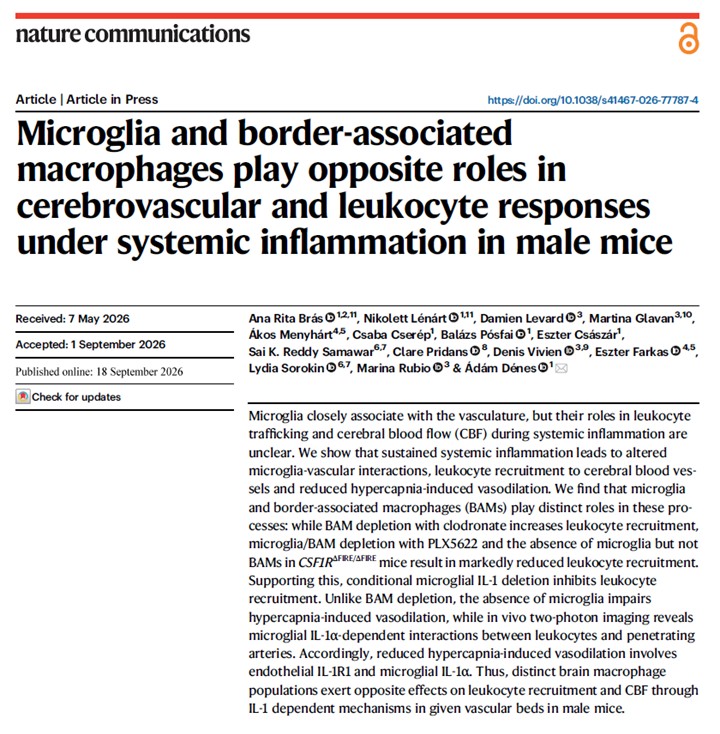
With the contribution of researchers from the Department and in collaboration with the Department of Medical Physics and Medical Informatics, our latest study has been published in the prestigious Journal of Applied Physiology under the title "Differential lung injury after permanent and transient focal cerebral ischemia in rats." The first author of the publication is Petra Somogyi, a former PhD student supervised by Dr. Ferenc Peták and Dr. Eszter Farkas, who is currently a researcher at the Department of Medical Physics and Medical Informatics. In this project, we investigated under experimental conditions how the duration of cerebral artery occlusion causing acute ischemic stroke influences secondary lung injury. Our findings provide new evidence that early restoration of blood flow through the occluded cerebral artery may not only reduce brain injury but also attenuate the development of stroke-associated pulmonary complications. Congratulations to all authors on this excellent achievement!

New PhD Students Join the Department

We are pleased to announce that, at its meeting held on 7 July 2026, the Doctoral Council of Medical and Pharmaceutical Sciences of the University of Szeged approved the admission of Regina Csordás and Krisztián Vinga to the Doctoral School of Experimental and Preventive Medicine of the Albert Szent-Györgyi Medical School. They have been awarded state-funded doctoral scholarships and admitted to the doctoral programs Regulation, Measurement and Analysis of Life Processes and Neuroscience, respectively. Regina and Krisztián will begin their PhD projects in our Department on 1 September 2026, under the supervision of Dr. Rita Frank and Dr. Eszter Farkas. We wish them every success in their doctoral studies and research!

Prestigious international publication

Our latest paper has been published in the prestigious Journal of Cerebral Blood Flow and Metabolism (JCBFM) under the title "Trifluoperazine reduces infarct size, restores neurovascular coupling, and improves early outcomes in experimental acute ischemic stroke." The study demonstrates that a well-established drug, originally developed for the treatment of psychiatric disorders, may reduce brain damage caused by stroke and improve recovery. Under experimental conditions, the drug reduces cerebral edema, protects nerve cells, and helps restore adequate blood supply to the brain. Because trifluoperazine is already an approved medication, these findings may provide the basis for drug repurposing for potential treatment for acute ischemic stroke. Congratulations to the authors on their high-quality research!

Outstanding Supervisors of Student Research at the School of Medicine

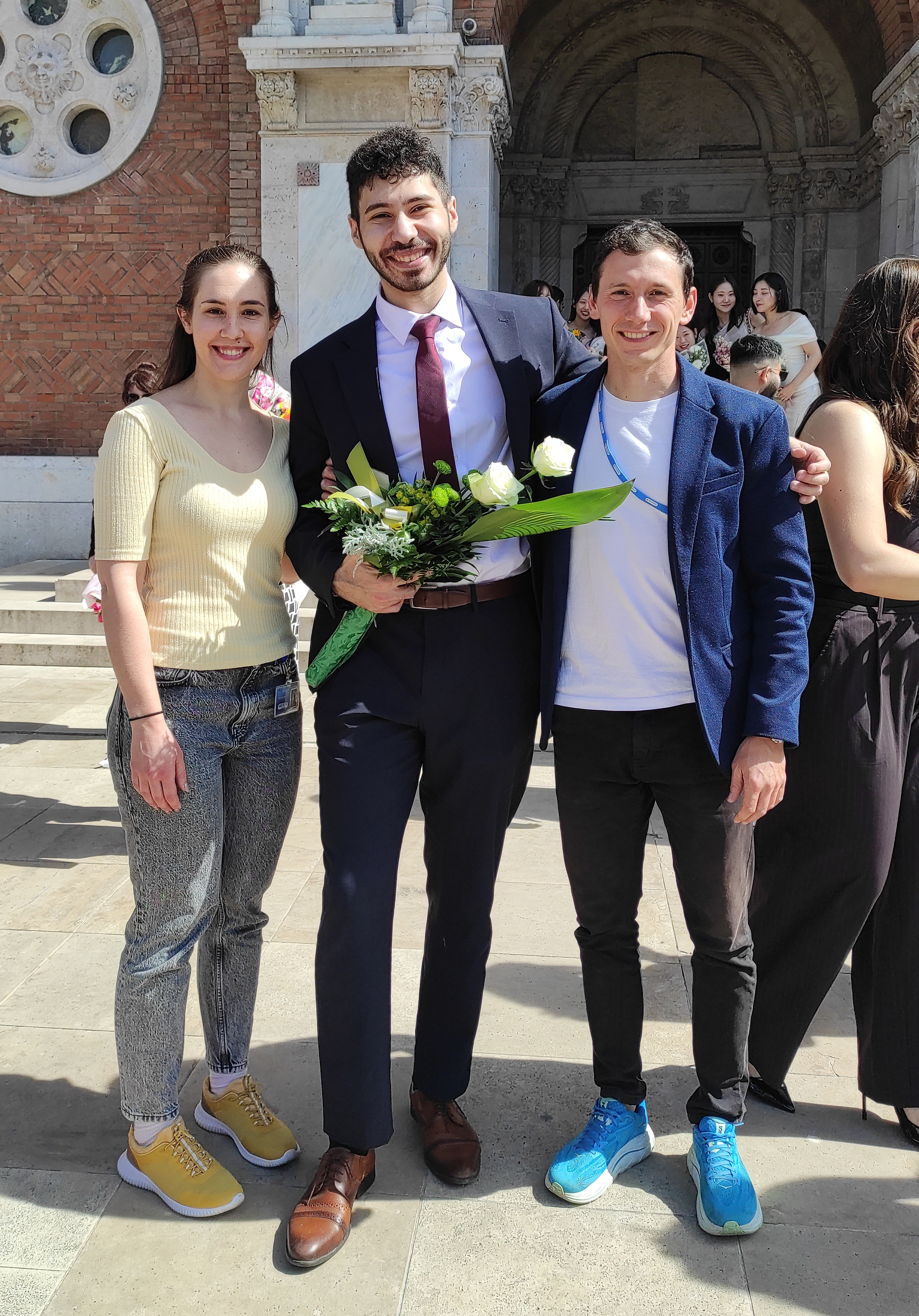
The graduation ceremony for the final-year medical students of the Albert Szent-Györgyi Medical School, University of Szeged, was held on June 25, 2026, at the József Attila Study and Information Centre. During the ceremony, Prof. Dr. Márta Széll, Dean of the Medical School, presented the Faculty's Outstanding Supervisor of Student Research awards. We are proud that three of the ten awards presented at the Faculty in a single academic year were received by faculty members of our Department: Prof. Dr. Eszter Farkas, Dr. Rita Frank, and Dr. Ákos Menyhárt. We thank our colleagues and the students participating in the Student Science Study Group (TDK) program under their supervision for their excellent work.

previous arrowprevious arrow
next arrownext arrow

Welcome to the home page of the Department of Cell Biology and Molecular Medicine of the University of Szeged!
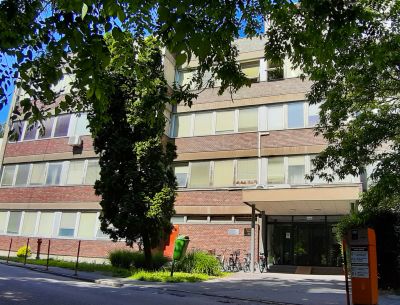
Cellbio

Our courses in the BSc and MSc biology program are given at the Biology Institute of the Faculty of Science and Informatics. We also contribute to the medical education with elective courses, and teach biology in the pre-medical program at the Albert Szent-Györgyi Medical School. Our required and elective courses are given in Hungarian and English. The study material focuses on topics in cell biology and molecular biology. We teach a foundation course in the postgraduate program and provide project supervision to several PhD students.

Three productive research groups pursue experimental projects in the field of stem cell research, neuroinflammatory processes, and the cellular pathomechanisms of acute cerebrovascular diseases. We conduct basic and translational research. Our research is integrated into dynamic national and international collaborative networks.

Our experienced staff members are dedicated to education and research. Our goal is to provide up-to-date teaching material and to build a firm basis in cell biology - a dynamically evolving field of science. We would like to promote an experimental, scientific approach to learning, and make research and academic careers attractive to students.

Eszter Farkas

Prof. Dr. Eszter Farkas
professor
department chair